December 11, 2025

Pitcher Perfect Holidays: Easy Winter Cocktails for a Crowd
Holiday Hosting Made Easy with Virginia Spirits

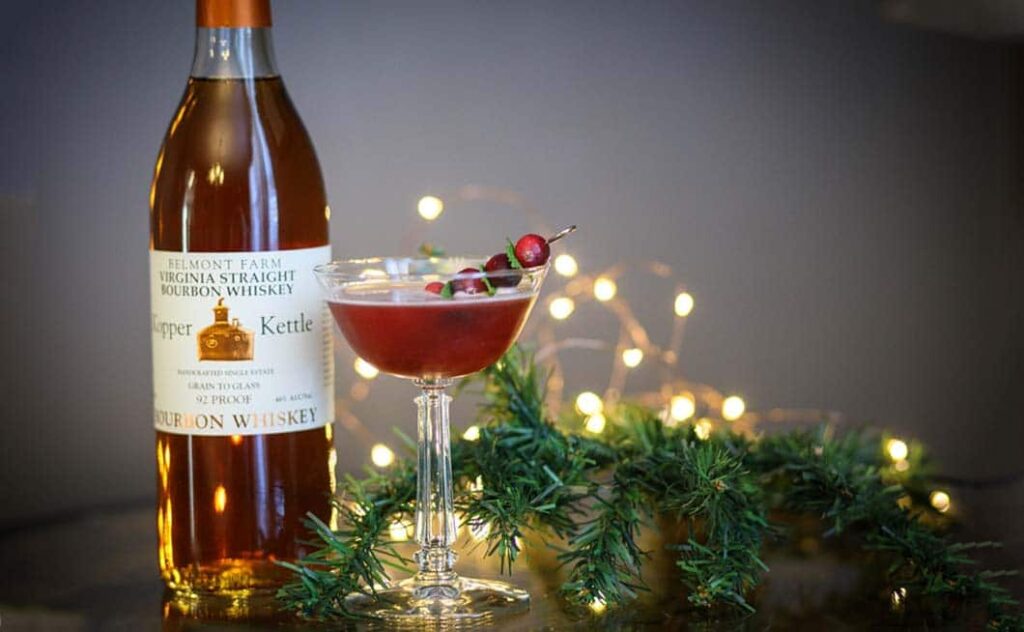
There’s nothing quite like gathering with friends or family during the holidays, and having a big batch of a delicious cocktail ready to go makes entertaining a breeze. Using Virginia-made spirits adds a special touch, letting guests toast the season with a local pour. 

Whether you’re hosting a small gathering by the fire or a lively celebration, these five seasonal recipes scale beautifully for holiday celebrations. Want even more ideas? Check out our full cocktail catalog below.

winter holiday cocktails with virginia spirits
Screenshot 2025-12-10 223533

Wassail Cocktail Recipe

Nothing says cozy and classic like a mulled cider punch.

Ingredients

Makes 8-10 servings.

  • 2 quarts apple cider
  • 1½ cups freshly squeezed orange juice
  • ½ cup lemon juice, 3–4 cinnamon sticks
  • 2–3 tablespoons brown sugar
  • 1 teaspoon ground cinnamon
  • ½ teaspoon ground cloves
  • ½ teaspoon ground ginger
  • 1–2 cups of your favorite Virginia spiced rum

Instructions

Combine the cider, juices, spices and sugar in a large pot and simmer (do not boil) for two hours. Remove from heat, stir in the rum, then ladle into mugs. Garnish with a seasonal cinnamon stick, fresh orange peel or warming star anise.

plantation punch

Merry & Bright Cocktail Recipe

Bright, tropical and packing a “punch,” this one is ideal for New Year’s parties or a holiday brunch. It’ll have you dreaming of warmer days.

Ingredients

Just one serving, so multiply proportions by the number of guests.

Instructions

Combine ingredients in a punch bowl or large pitcher, stir and serve chilled (or over ice) for an easy, festive crowd-pleaser.

P.S. Belmont Farm happens to have another recipe on deck that incorporates its Kopper Kettle Bourbon. This “Cream of the Crop” cocktail is heavy on the sweet and indulgent, so be sure to check it out for the perfect holiday night-cap.

jingle juice cocktail

Jingle Juice Cocktail Recipe

Bring the party with this show stopper!. A festive, flavorful cocktail balancing sweet, tart and herbal notes.

Ingredients

Single serve, scale as needed! 

  • 1½ oz Virginia-Highland Whisky
  • 1 oz cranberry-sage simple syrup* (make ahead – it’s worth it!)
  • ½ oz fresh lemon juice
  • ½ oz fresh lime juice
  • ½ oz orange liqueur
  • Garnish with fresh red cranberries!

Instructions

Mix the whisky, syrup, citrus juices and liqueur. Serve it on the rocks (glasses optionally sugar-rimmed), stir gently and garnish by the glass.

*Cranberry-sage simple syrup is made by simmering equal parts sugar and water with whole cranberries, cinnamon sticks, sage leaves — steep, muddle and strain.

rye spiced cider cocktail

Rye Spiced Cider Cocktail Recipe

A simple, warming sip — perfect for smaller gatherings or as a mellow apéritif.

Ingredients

Single or a few servings, batch to your heart’s desire!

Instructions

Stir the rye and pumpkin-pie spice until smooth, then add the cider. Serve chilled over ice, or gently warm it up on the stove for a cozy hot drink.

white christmas vodkarita

White Christmas Vodkarita Cocktail Recipe

A creamy, winter-twist on a margarita! This cocktail is ideal for holiday parties when you want something a bit whimsical.

Ingredients

Again, just for you, so make the proper adjustments.

Instructions

Combine all ingredients in a blender, then pour over ice. Garnish with a sprig of rosemary and a few cranberries for a festive touch.

Make It Virginia

No matter your holiday plans, these Virginia-made, batchable cocktails make entertaining smooth, simple and seasonal. So mix up a pitcher, ladle it into mugs (or serve over ice) and raise a toast to good company and even better libations. Here’s to a (Virginia-) spirited holiday season!

Apple Pickin’

Belmont Farm Distillery

Jingle Julep

Belmont Farm Distillery

Pumpkin Flip

Vitae Spirits Distillery

November 12, 2025

Thanksgiving Pairings with Virginia Spirits
Where Local Flavor Meets Thanksgiving Tradition

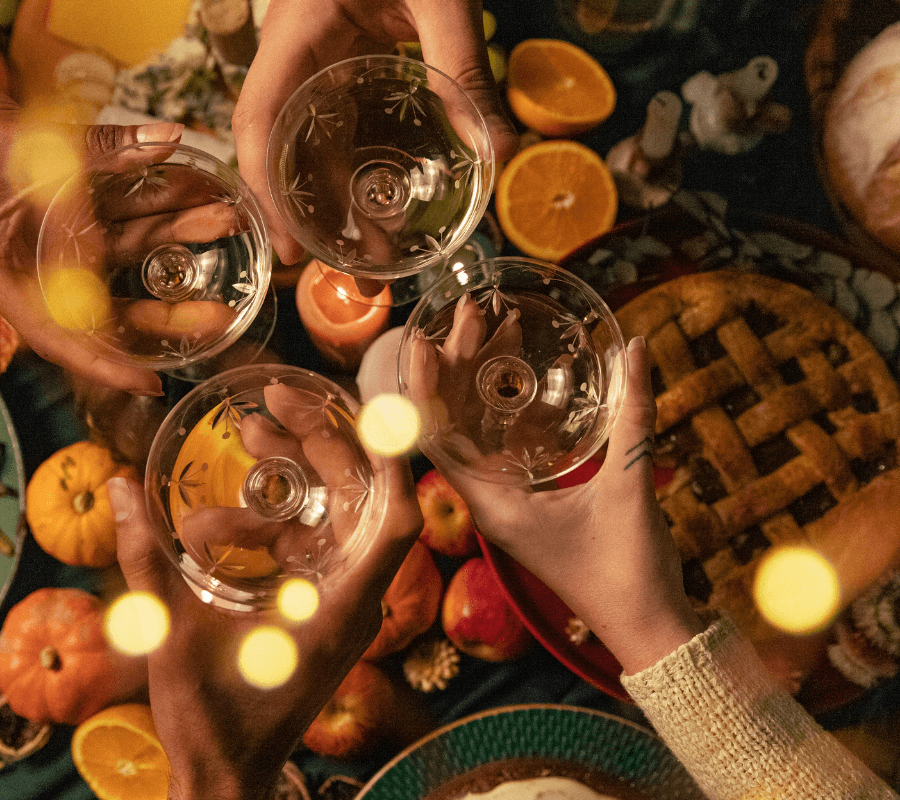
There’s something special about Thanksgiving in Virginia — the crisp air, the bounty of local harvests and the warmth of family gathered around the table. It’s a time to celebrate everything we’re thankful for, from the farmers who grow our grains to the distillers who turn them into world-class spirits.

Across the commonwealth, distillers craft their spirits using homegrown ingredients like Virginia corn, wheat, apples, honey and herbs. The result is a true reflection of the land, shaped by tradition, craftsmanship and community. Each pour tells the story of our state’s agricultural heritage, and that makes every sip worth savoring this holiday.

This holiday season, bring a little local flavor to your feast with your choice of Virginia-made whiskey, rum, brandy, gin, moonshine or vodka. Whether you’re hosting the meal or bringing a bottle to share, here’s how to pair the commonwealth’s finest with your favorite Thanksgiving dishes.

Thanksgiving Dinner with Friends

The Thanksgiving Table: Course-by-Course Pairings

Bring Virginia to the table this Thanksgiving. Each course — from turkey to pie — finds its perfect match in a locally crafted spirit. Here’s how to pair your feast, sip by sip.

Thanksgiving Main Course, Turkey

Main Course: Roast Turkey & Savory Sides

The heart of the Thanksgiving table deserves a spirit with just as much character. Virginia’s bourbons and ryes bring depth and balance that complement the rich, savory flavors of the main feast.

Why it works

Bourbon’s caramel, vanilla, and oak notes echo the rich flavors of roasted turkey and gravy, while rye adds a peppery, spiced finish that cuts through buttery sides.

Try it as

A Maple Old Fashioned — Virginia bourbon, a touch of maple syrup and a few dashes of bitters.

Thanksgiving Cranberry Sauce

Sweet Potatoes & Cranberry Sauce

Sweet and tangy, these Thanksgiving staples shine when paired with a spirit that matches their depth and spice.

Why it works

The smooth molasses and baking-spice character of Virginia Spiced Rum enhances the warmth of sweet potato dishes and plays beautifully with tart cranberry sauce.

Try it as

A Spiced Apple Rum Cocktail or Rum Old Fashioned for a cozy, dessert-friendly pairing.

Thanksgiving Sides

Herbed Stuffing & Green Beans

Earthy, aromatic, and full of texture, these sides call for a spirit that can brighten and refresh between bites.

Pair With

Why it works

Gin infused with local botanicals brings herbal brightness that refreshes the palate between bites and complements earthy, aromatic flavors.

Try it as

A classic Gin & Tonic with a rosemary sprig or a crisp Gin Martini to elevate the meal.

Thanksgiving Pies

Dessert: Apple Pie, Pumpkin Pie or Pecan Pie

As the final course arrives, Virginia’s sweeter spirits step into the spotlight — echoing the warm spices, baked fruits, and buttery richness that make dessert unforgettable.

Pair With

Virginia Apple Brandy or Wheated Bourbon

Why it works

Apple brandy brings orchard-fresh fruitiness and warmth, while a wheat bourbon offers buttery sweetness that mirrors pie crust and pecans.

Try it as

An Apple Brandy Sour or Bourbon Cream Coffee for an after-dinner treat.

Thanksgiving Cocktails

After Dinner: Coffee & Conversation

Thanksgiving may wind down, but Virginia’s liqueurs keep the spirit alive — turning quiet moments into something worth savoring.

Why it works

These smooth, velvety spirits are perfect for lingering at the table. Pour over ice, mix with coffee or in your favorite coffee-inspired cocktail, or drizzle over dessert. It’ll add a touch of indulgence to every toast and every bite.

Try it as

An Iced Coffee Latte or simply served over ice with a dusting of cocoa. You can also check out Belle Isle Spirits for additional recipes.

Make It Virginia

When you pour Virginia-made spirits, you’re not just choosing flavor, you’re supporting local farmers, craftspeople and communities. Beyond the table, keep the exploration going by visiting tasting rooms in your backyard. You also can make the most of the season by purchasing bundles and cocktail kits and taking advantage of holiday sales like Black Friday.

November 10, 2025

Honoring Service & Spirits: Virginia’s Veteran-Owned Distilleries
Together, We Raise a Glass

When it comes to honoring those who have served, one of the best ways to show your support is by celebrating veteran-owned businesses. Virginia is home to exceptional distilleries founded by veterans who bring the same dedication, precision and pride from their service to the craft of spirits-making across the commonwealth.

These veteran-owned distilleries go beyond producing award-winning spirits, they embody Virginia’s deep-rooted distilling heritage and a continued commitment to excellence. Whether you’re visiting a tasting room or picking up a bottle to share, Veterans Day is the perfect time to raise a glass to their service and their spirits.

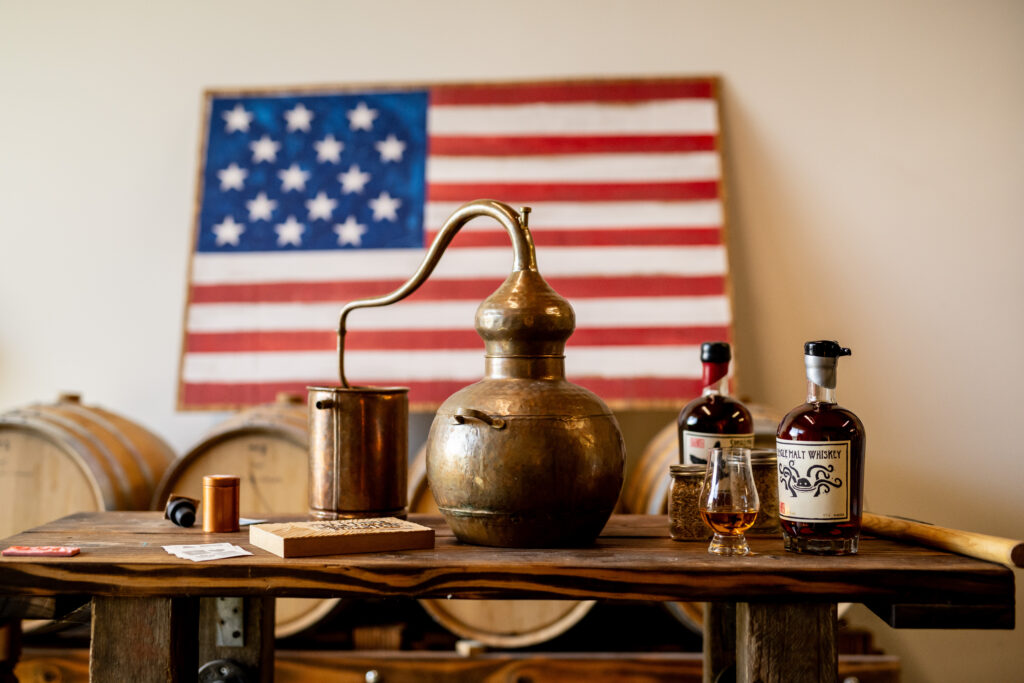
Copper still next to American flag and barrels for distilled spirits.

VETERAN OWNED DISTILLERIES

Celebrate the holiday by exploring these distilleries across the commonwealth.

Blue Shepherd Spirits

Founded by Alex Colby, veteran, firefighter and paramedic

This veteran- and first responder-owned distillery crafts artisanal, small-batch spirits in beautiful Luray. Alex and his wife opened Blue Shepherd Spirits in 2022 during Alex’s firefighting career, inspired by their love of Virginia’s beverage scene. Visit their tasting room for a handcrafted cocktail and meet the namesake Bruce, the family’s beloved Blue Shepherd dog.

Brady's Distillery owned by a U.S. Air Force Veteran

Brady’s Distillery

Co-owned by Tim Brady, U.S. Air Force veteran

After retiring from the Air Force as a master sergeant, Tim Brady became the third partner at Brady’s Distillery. During his career, he served on the Air Force Inspector General team and earned multiple Meritorious Service Medals. Founded in 2020, Brady’s Distillery offers meticulously crafted spirits, from bourbon and whiskey to vodka and rum, designed to satisfy everyone from the seasoned enthusiast to the curious newcomer.

Caiseal Beer & Spirits Company

Founded by Randy Thomas, retired O-5 U.S. Navy commander

Located inside The Vanguard Brewpub and Distillery in Hampton Roads, Caiseal Beer & Spirits Co. was founded by Randy Thomas following his retirement as a Navy commander in 2017. Today, the restaurant and distillery is a local favorite for live music, quality spirits and chef-inspired dishes. Stop by to sip craft cocktails, enjoy local entertainment and experience the spirit of coastal Virginia.

Deep Creek Distilling

Founded by David Emmons, service-disabled veteran

After 25 years with Naval Special Warfare Teams on the east coast, where he attained the rank of master chief, David Emmons retired and founded Deep Creek Distilling. A service-disabled veteran, Emmons and his late business partner, Royall Ferguson, have spent the last decade crafting award-winning spirits infused with passion and precision. Visit their tasting room to experience Deep Creek’s commitment to traditional distilling.

Falls Church Distillers

Founded by Michael Paluzzi, U.S. Air Force veteran
Head of production: Christian Paluzzi, U.S. Air Force veteran

This family-run distillery is built on passion for craftsmanship and community. Founder Michael Paluzzi, an Air Force veteran and award-winning distiller, operates Falls Church Distillers with his two sons, including Christian, a third-generation Air Force veteran who served six years on active duty. Located just outside the nation’s capital, its spirits can be found in ABC stores and restaurants across Virginia and Washington, D.C.

Highlands Distillery Company

Founded by Chris Saufley, retired U.S. Navy executive officer

Chris Saufley founded Highlands Distilling Company to celebrate the heritage of Southwest Virginia, the Blue Ridge Highlands and the service of military members and first responders. Each small-batch spirit is named in honor of those who have served at sea and history that has shaped the region. Stop by the Marion tasting room to sample its Navy Strength Gin and other exceptional spirits that pay tribute.

KO Distilling

Founded by Bill Karlson and John O’Mara, U.S. Navy veterans

Bill Karlson and John O’Mara met as midshipmen at the U.S. Merchant Marine Academy and have been lifelong friends ever since. Both sailed in the merchant marine and served in the U.S. Navy Reserve before founding KO Distilling, where they craft small-batch spirits from local ingredients. Their Manassas distillery has become a community gathering place, where visitors can enjoy a glass of Bare Knuckle Straight Bourbon Whiskey and learn about the distilling process from mash to bottle.

Three Crosses Tasting Room

Three Crosses Distilling Company

Co-owned by John Davenport, veteran

Powhatan County’s first legal distillery, Three Crosses Distilling Co. is proudly veteran-owned and woman-run. Founders John and Michelle Davenport bring a shared passion for Virginia spirits and Appalachian heritage to every batch. John oversees production with precision and care, while Michelle lends her love of bourbon and hospitality to the tasting room experience. Visitors can enjoy handcrafted spirits and a locally inspired menu in this cozy, welcoming space.

Maybe you’ve wondered why there isn’t an abundance of Virginia “tequila” filling up the shelves at Virginia ABC stores near you. 

At the end of the day, the spirits we know as “tequila” can only be produced in Mexico. The legal definition just doesn’t allow for an entirely local, Virginia tequila. Dating back to 1974, the Mexican government declared tequila an intellectual property and established the Tequila Regulatory Council to oversee production and ensure quality and culture. 

In order to keep it authentic, the highly regulated spirit is confined to the following parameters: 

  • Must be made with at least 51% Blue Weber Agave. The remaining sugar may come from non-agave products, such as sugar cane which also grows in Mexico.
  • Tequilas made with 100% Blue Weber Agave are labeled as such, those made with less than 100% are called “mixto.”
  • Tequila can only be made in five areas of Mexico with 99% being made in Jalisco, home to the town Tequila. 
  • Tequila must be bottled between 35 and 55% abv. (Must be at least 40% to be sold as a Tequila in the U.S.)
  • And more!

If a Virginia producer claims a tequila (like the Dr. Stoner’s line from Chesapeake Bay Distillery), the product is sourced, distilled and imported straight from Mexico. 

Tequila is a specific type in the broader category of agave spirits. And fortunately for us, there are Virginia producers who are serving up their very own, unique renditions that fit the bill, deserve consideration on their own merits and land in some of the very same classic cocktails like margaritas or palomas. 

How to Make

  • 1. Harvest – Agave plants are ready to harvest after five to eight years when the piña, or inner core, swells and ripens.
  • 2. Bake the piña – Cook the piña at a low temperature for just over 20 hours to extract fermentable sugars. 
  • 3. Shred or crush the piña and extract the juice, called mosto.
  • 4. Ferment the mosto – Add yeast to the mosto and let it ferment for several days to several weeks, depending on the recipe.
  • 5. Distill the fermented juice – Transfer the fermented juice to a still and separate it into liquid and vapor states. The distillate can be categorized into different parts, with the middle section, called the “hearts,” being the consumable portion.
  • 6. Age the spirit – Depending on the style of spirit being made, it may need to be aged for different amounts of time in oak barrels. For example, tequila can be aged for zero to two months for blanco, silver, or white tequila, two months to one year for reposado tequila, or one to three years for añejo tequila. 

 *If interested in making your own “agave spirit,” you must follow Virginia codes and regulations.

The Virginia Way

mt defiance agave spirits

One Virginia producer in particular has a keen method of developing its line of agave spirits: Mt. Defiance Distillery. We spoke to Peter Ahlf, head distiller, to discuss his process. 

Mt. Defiance Distillery uses two sources of agave syrup: the traditional blue Weber agave and a blend of wild agaves sourced from all over Mexico. This wild agave syrup uses excess agave plants from small producers and is a very sustainable product – plus blending with the blue Weber agave yields distinct flavors and offers room for experimentation.

The distillery also ages both the blue and wild agave spirits in different types of barrels for different lengths of time. Aging length ranges from several months to over three years, using the typical terminology used for tequila. Types of barrels include new barrels, used bourbon barrels and used rum barrels. 

Maybe you’ve wondered why there isn’t an abundance of Virginia “tequila” filling up the shelves at Virginia ABC stores near you. 

At the end of the day, the spirits we know as “tequila” can only be produced in Mexico. The legal definition just doesn’t allow for an entirely local, Virginia tequila. Dating back to 1974, the Mexican government declared tequila an intellectual property and established the Tequila Regulatory Council to oversee production and ensure quality and culture. 

In order to keep it authentic, the highly regulated spirit is confined to the following parameters: 

  • Must be made with at least 51% Blue Weber Agave. The remaining sugar may come from non-agave products, such as sugar cane which also grows in Mexico.
  • Tequilas made with 100% Blue Weber Agave are labeled as such, those made with less than 100% are called “mixto.”
  • Tequila can only be made in five areas of Mexico with 99% being made in Jalisco, home to the town Tequila. 
  • Tequila must be bottled between 35 and 55% abv. (Must be at least 40% to be sold as a Tequila in the U.S.)
  • And more!

If a Virginia producer claims a tequila (like the Dr. Stoner’s line from Chesapeake Bay Distillery), the product is sourced, distilled and imported straight from Mexico. 

Tequila is a specific type in the broader category of agave spirits. And fortunately for us, there are Virginia producers who are serving up their very own, unique renditions that fit the bill, deserve consideration on their own merits and land in some of the very same classic cocktails like margaritas or palomas. 

How to Make

  • 1. Harvest – Agave plants are ready to harvest after five to eight years when the piña, or inner core, swells and ripens.
  • 2. Bake the piña – Cook the piña at a low temperature for just over 20 hours to extract fermentable sugars. 
  • 3. Shred or crush the piña and extract the juice, called mosto.
  • 4. Ferment the mosto – Add yeast to the mosto and let it ferment for several days to several weeks, depending on the recipe.
  • 5. Distill the fermented juice – Transfer the fermented juice to a still and separate it into liquid and vapor states. The distillate can be categorized into different parts, with the middle section, called the “hearts,” being the consumable portion.
  • 6. Age the spirit – Depending on the style of spirit being made, it may need to be aged for different amounts of time in oak barrels. For example, tequila can be aged for zero to two months for blanco, silver, or white tequila, two months to one year for reposado tequila, or one to three years for añejo tequila. 

 *If interested in making your own “agave spirit,” you must follow Virginia codes and regulations.

The Virginia Way

mt defiance agave spirits

One Virginia producer in particular has a keen method of developing its line of agave spirits: Mt. Defiance Distillery. We spoke to Peter Ahlf, head distiller, to discuss his process. 

Mt. Defiance Distillery uses two sources of agave syrup: the traditional blue Weber agave and a blend of wild agaves sourced from all over Mexico. This wild agave syrup uses excess agave plants from small producers and is a very sustainable product – plus blending with the blue Weber agave yields distinct flavors and offers room for experimentation.

The distillery also ages both the blue and wild agave spirits in different types of barrels for different lengths of time. Aging length ranges from several months to over three years, using the typical terminology used for tequila. Types of barrels include new barrels, used bourbon barrels and used rum barrels. 

So, we’ve already shared a deep dive on whiskey in the commonwealth (read it here), but what about just bourbon? Maybe you’re a connoisseur and don’t need the play-by-play, but if you’re a casual sipper or just curious, here’s what you need to know. 

Whiskey is the top produced spirit in Virginia with just about 50 producers spanning the state. Bottle to bottle, you’ll find a great variance in flavor profiles, style, aging and more – down to the balance of its very ingredients (or in this case, grains). 

All bourbon is whiskey, but not all whiskey is bourbon. 

In order for a whiskey to be called bourbon, it must be made from a mash that is at least 51 percent corn and aged — for no particular amount of time — in new, charred oak barrels. 

One way these requirements can manifest in the bottle is how sweet or smooth the whiskey is. For example, a higher percentage of corn typically makes the end result sweeter. The specific type of barrels used for aging also tends to introduce a distinct flavor and smooth, velvety mouthfeel. 

Keep reading for the rundown on how to make, shop, store and enjoy Virginia bourbon. 

How to Make

All whiskey starts as raw grain (corn, barley, rye or wheat) before it finds its way into a bottle. Details like where the grain was grown (read about terroir), the water used in the distillation process, and how and how long it ages all matter and come together to make the final, unique product. The technical process itself is complex and nuanced, but here are the basics:

  1. Mashing: The sugars contained in the grain have to be separated before fermentation can begin. The grains that are being used are ground up, put in a large tank (called a mash tun or tub) with hot water and agitated. It should resemble porridge before the fermentation stage.
  2. Fermentation: Fermentation occurs when the mash meets yeast, which converts all the sugars into alcohol. This takes place in giant vats, often called washbacks. The process can take a few days, with different fermentation times and yeast strains all impacting the final product. The resulting liquid reaches about 7-10% ABV before it goes into the still.
  3. Distillation: The process of distilling increases the alcohol content of the liquid and brings out volatile components, both good and bad. The two most common types of stills (pot stills and column stills) determine how this all happens.
  4. Maturation: Nearly all whiskies are aged in wood — and for bourbon, it must be aged in new, charred oak barrels. Then, batches are stored away and left to age for as long as the producer decides. 
  5. Bottling: When it’s ready, bourbon is bottled at a minimum of 40% ABV. When only one barrel is bottled at a time, it’s labeled as single cask or single barrel — always an exciting prospect when shopping Virginia whiskies.

stills from A. Smith Bowman Distillery


*If you’re interested in making your own imbibe, you must follow Virginia codes and regulations. Licenses may be required. 

The Virginia Way

First, it should be known that Virginia is the Birthplace of American Spirits, and that includes bourbon. 

“The exact date of when Bourbon was invented is greatly debated, but most put it around the 1780s,”  said David Bock, master distiller at A. Smith Bowman Distillery. “Virginia became a state in 1788, while Kentucky didn’t become a state until 1792. Prior to becoming a state, Kentucky’s land was part of Virginia, so the roots of bourbon making are forever tied to Virginia’s history.”

Bock – after coming to A. Smith Bowman Distillery from New Orleans as head distiller – has learned the legacy better than most. 

In 1934, A. Smith Bowman established a distillery on the 7,200-acre Sunset Hills farm in Fairfax County as a way to put to use excess grains. Until the 1950s, A. Smith Bowman Distillery was the only legal producer of spirits in Virginia. The distillery has since relocated to Fredericksburg (in 1988), but it carries with it a storied history of bourbon-making and excellence. 

“I often consider Virginia Bourbon a “hidden gem” as it doesn’t get the notoriety… but we’re honoring a craft and tradition that has been part of this state for centuries,” Bock said.

Another misperception is that bourbon has to be made in Kentucky. Spoiler alert: it actually can be produced anywhere. And Virginia is uniquely positioned to make great bourbon.

“Corn grows so well in Virginia, and I think that leads to more production of bourbon than other whiskeys like single malts and rye,” said Owen King, distiller at Ironclad Distillery in Newport News. “Also, Virginia has huge temperature swings that really help the bourbon mature nicely and at a greater rate.”

King also pointed out that people are fierce fans of bourbon, “I love Virginia bourbon, it’s all we produce. Bourbon was the first thing the federal government food and drug admiration protected – I find it fascinating that when the government tried to tax whiskey it caused a rebellion. Virginia bourbon is unique and special and can go toe-to-toe with any other state.”

So, why doesn’t everyone produce bourbon if it’s one of the state’s most beloved spirits and so well suited for Virginia? 

Justin Boyle, distiller at Tarnished Truth Distilling Company in Virginia Beach, says it may have to do with the strict regulations on the spirit and the cost to produce an aged spirit. 

“Bourbon is one of the most regulated spirits in the world,” Boyle said. “It also can take up resources and require an expensive overhead cost to produce a spirit that has to age in oak for years before it reaches maturity.”

But he also points out that the tedious endeavor to create something you want to taste the same year-to-year – given all the different variables that might lend to different flavors, grain, fermentation, distillation and aging – is what keeps him excited. 

“To me, Virginia bourbon is the quintessential American spirit. It embodies all the characteristics of life, liberty and the pursuit of happiness (even if it’s a brown liquid in a glass). We are following a time honored tradition of making a specific spirit to exactness. We are aging it the traditional way in 53-gallon casks. We, at Tarnished Truth, have the Atlantic salty air that permeates our barrels. We like to say our barrels are “agitated by freedom” as the U.S. Navy jets fly overhead.” 

Many distilleries across the state have turned this time-honored tradition into success, striking gold and double gold at competitions across the world. One competition, a little closer to home and respected for its results and a great time, is the Virginia Bourbon Invitational hosted by Tarnished Truth. 

This annual (currently six-time), bourbon-exclusive event is hosted on an early Saturday in November. In 2024, 18 distilleries participated in a judges blind tasting, with the top three big winners being: 

  1. Reservoir Distillery Hazmat Bourbon
  2. KO Distilling Distiller’s Reserve Bottled-in-Bond Bourbon
  3. Chesapeake Bay Distillery Bay Bourbon

“We host local distilleries to give them a platform to shine to an audience they might never reach,” Boyle said. “This year’s competition highlighted how much Virginia bourbons are improving and growing, culminating in the absolute best version yet. The blind judges even remarked how much the distilleries have matured and improved on their flavors, their aging and their ingenuity.”

Andrew Yancey presents 2nd place award to KO Distilling

How to Shop

If you’re lucky enough to live in Virginia, a.k.a the Birthplace of American Spirits, you have no shortage of options when it comes to bourbon. (And if you don’t, luckily, many distilleries ship out-of-state). With a variety of grains, producers and styles, there is something for everyone. 

You have two simple options to purchase a local bottle: Virginia ABC or straight to the source at the distillery. With 400+ stores, you’re likely not far from a Virginia ABC store. If your store doesn’t have what you’re looking for, you can order online and have it shipped to a store of your choice within 7-14 days. If you’re looking for an experience and you want the opportunity to try before you buy, visiting a local distillery is your best bet. Plus, you’ll even find some small-batch products at the distillery that may not be on the shelves or listed with Virginia ABC. 

Taking advantage of events or festivals is another great option to sample before committing to the purchase. Distilleries are always dropping new releases or will occasionally have pop-up sales, so if there are brands you know and love, be sure to sign up for newsletter lists or join their club for early access. 

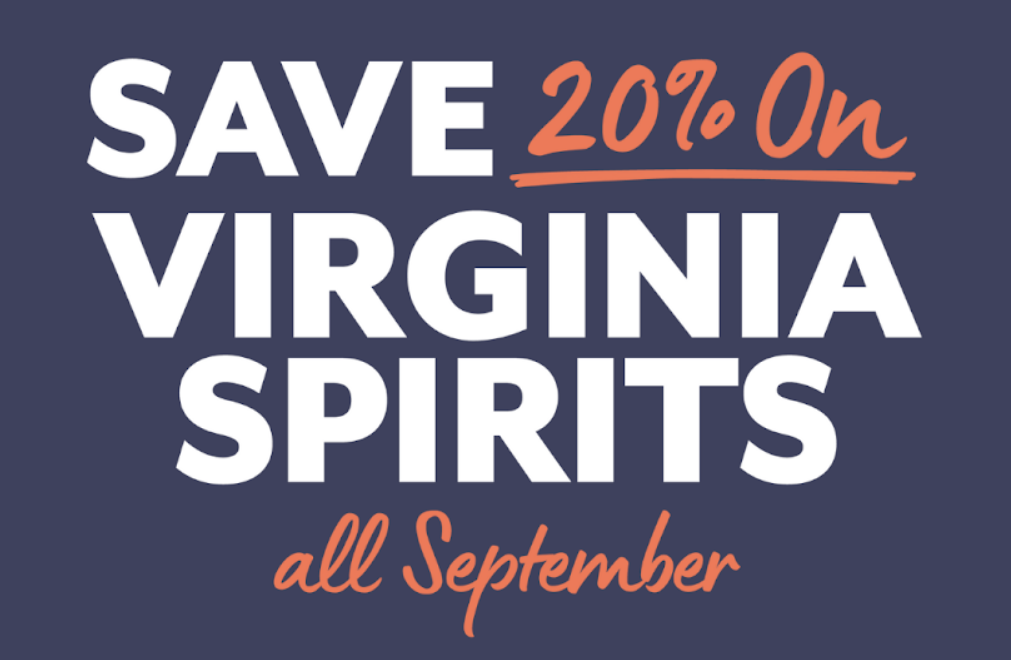
Speaking of insider knowledge, did you know that September is Virginia Spirits Month? Lucky for you, many Virginia spirits, both in-store at Virginia ABC and at distillery tasting rooms, are offered at 20% off. The perfect time to stock up or try something new.

Finally, simply ask for Virginia-made at your favorite restaurant and try a glass out first. Chat with your local bartender or server to determine a recommendation. The more we ask for and support local, the more you’ll see Virginia on the menu!

How to Store

Once you have your first sip of Virginia bourbon, you might just be hooked. Whether your home bar consists of one or two premium bottles or a dozen, here’s what you need to know about proper storage so the last drop is as delectable as the first. 

  1. Keep It Dark and Cool: Limit exposure to sunlight and fluctuations in temperature and humidity, which can damage the label and cork. Keep in mind, if the bottle is open, your bourbon is exposed to the elements. Opt to keep it in a dark, room-temperature cabinet or closet.
  2. Keep it Upright: Instead of storing on its side (like wine), whiskey should always be kept upright so that unwanted flavors from the cork doesn’t make its way into the high-proof liquid. If you’re holding onto your bottle for an extended period of time, turn it on its head every four to six months and let the cork moisten for about ten seconds. (You don’t want the cork to dry out completely and crumble). 
  3. Keep it Closed: After opening, you should pay close attention to too much “headspace” (empty air) at the top of the bottle, which can lead to oxidation and off-flavors over time. There are products like the Private Preserve that inserts inert gas to fill the space. Or consider purchasing smaller bottles, or clean and save old bottles and decant the whiskey into them. Another option is to wrap the bottle closure tightly with Parafilm to keep out moisture and air. 

As your collection grows, check out this guide to maintaining (and showcasing) your most valuable bottles. P.s. don’t forget to inventory as you go along!

How to Enjoy

Contributions from Patrick Evans-Hylton

If you’re new to bourbon, or simply want to elevate your glass, knowing the right way to enjoy it – to sip or turn into a classic cocktail– is step one.

Cheers with 2 cocktails

Ultimately, how you decide to enjoy your whiskey is entirely up to you. There are no rules, ever. But there are a few guidelines that can help determine your decision between sipping and crafting cocktails with your bottle – and perhaps, might influence the one you decide to purchase. 

    • Age: Age statements tell you how many years a spirit spent in barrel; therefore, its presumed level of maturity. For some connoisseurs, this is everything when evaluating the merits of a particular bottle. Nowadays, age can often mean complexity and smoothness, but sometimes the 5-year-old spirit outweighs the ten and so on (see bullet four). 
    • Flexibility and Flavor Profile: For a cocktail spirit, one school of thought may be to look for something that is relatively neutral and not overpowering. If a whiskey has complex tasting notes and is unique in production, you probably want to hold onto it and drink on its own. Or maybe the flavor profile is so interesting and packed with flavor that it could spark an idea for you to develop or tweak your own cocktail recipe.
  • Price Point: A more obvious choice is price. You might want a more inexpensive option for cocktails because it will likely take on the flavors of the mixers and overall blend – or if you’re looking for a crowd-pleasing batch cocktail for entertaining. For the ones with the heftier price tag, think of it as a special treat into your collection. Once those are opened, you’ll likely be inspired to sip on every last drop. 
  • Try It First: Learning the ins and outs of bourbon starts with tasting it! And then tasting it again, tasting a different one and so on and so forth. Do you like it neat? Keep drinking. Could it be enhanced in a cocktail? Go for it. At the end of the day, your taste buds are all that matters, so enjoy it how you prefer. 

Discover More Virginia-Made Bourbon Cocktail Recipes

Maybe you’ve wondered why there isn’t an abundance of Virginia “tequila” filling up the shelves at Virginia ABC stores near you. 

At the end of the day, the spirits we know as “tequila” can only be produced in Mexico. The legal definition just doesn’t allow for an entirely local, Virginia tequila. Dating back to 1974, the Mexican government declared tequila an intellectual property and established the Tequila Regulatory Council to oversee production and ensure quality and culture. 

In order to keep it authentic, the highly regulated spirit is confined to the following parameters: 

  • Must be made with at least 51% Blue Weber Agave. The remaining sugar may come from non-agave products, such as sugar cane which also grows in Mexico.
  • Tequilas made with 100% Blue Weber Agave are labeled as such, those made with less than 100% are called “mixto.”
  • Tequila can only be made in five areas of Mexico with 99% being made in Jalisco, home to the town Tequila. 
  • Tequila must be bottled between 35 and 55% abv. (Must be at least 40% to be sold as a Tequila in the U.S.)
  • And more!

If a Virginia producer claims a tequila (like the Dr. Stoner’s line from Chesapeake Bay Distillery), the product is sourced, distilled and imported straight from Mexico. 

Tequila is a specific type in the broader category of agave spirits. And fortunately for us, there are Virginia producers who are serving up their very own, unique renditions that fit the bill, deserve consideration on their own merits and land in some of the very same classic cocktails like margaritas or palomas. 

How to Make

  • 1. Harvest – Agave plants are ready to harvest after five to eight years when the piña, or inner core, swells and ripens.
  • 2. Bake the piña – Cook the piña at a low temperature for just over 20 hours to extract fermentable sugars. 
  • 3. Shred or crush the piña and extract the juice, called mosto.
  • 4. Ferment the mosto – Add yeast to the mosto and let it ferment for several days to several weeks, depending on the recipe.
  • 5. Distill the fermented juice – Transfer the fermented juice to a still and separate it into liquid and vapor states. The distillate can be categorized into different parts, with the middle section, called the “hearts,” being the consumable portion.
  • 6. Age the spirit – Depending on the style of spirit being made, it may need to be aged for different amounts of time in oak barrels. For example, tequila can be aged for zero to two months for blanco, silver, or white tequila, two months to one year for reposado tequila, or one to three years for añejo tequila. 

 *If interested in making your own “agave spirit,” you must follow Virginia codes and regulations.

The Virginia Way

mt defiance agave spirits

One Virginia producer in particular has a keen method of developing its line of agave spirits: Mt. Defiance Distillery. We spoke to Peter Ahlf, head distiller, to discuss his process. 

Mt. Defiance Distillery uses two sources of agave syrup: the traditional blue Weber agave and a blend of wild agaves sourced from all over Mexico. This wild agave syrup uses excess agave plants from small producers and is a very sustainable product – plus blending with the blue Weber agave yields distinct flavors and offers room for experimentation.

The distillery also ages both the blue and wild agave spirits in different types of barrels for different lengths of time. Aging length ranges from several months to over three years, using the typical terminology used for tequila. Types of barrels include new barrels, used bourbon barrels and used rum barrels. 

Maybe you’ve wondered why there isn’t an abundance of Virginia “tequila” filling up the shelves at Virginia ABC stores near you. 

At the end of the day, the spirits we know as “tequila” can only be produced in Mexico. The legal definition just doesn’t allow for an entirely local, Virginia tequila. Dating back to 1974, the Mexican government declared tequila an intellectual property and established the Tequila Regulatory Council to oversee production and ensure quality and culture. 

In order to keep it authentic, the highly regulated spirit is confined to the following parameters: 

  • Must be made with at least 51% Blue Weber Agave. The remaining sugar may come from non-agave products, such as sugar cane which also grows in Mexico.
  • Tequilas made with 100% Blue Weber Agave are labeled as such, those made with less than 100% are called “mixto.”
  • Tequila can only be made in five areas of Mexico with 99% being made in Jalisco, home to the town Tequila. 
  • Tequila must be bottled between 35 and 55% abv. (Must be at least 40% to be sold as a Tequila in the U.S.)
  • And more!

If a Virginia producer claims a tequila (like the Dr. Stoner’s line from Chesapeake Bay Distillery), the product is sourced, distilled and imported straight from Mexico. 

Tequila is a specific type in the broader category of agave spirits. And fortunately for us, there are Virginia producers who are serving up their very own, unique renditions that fit the bill, deserve consideration on their own merits and land in some of the very same classic cocktails like margaritas or palomas. 

How to Make

  • 1. Harvest – Agave plants are ready to harvest after five to eight years when the piña, or inner core, swells and ripens.
  • 2. Bake the piña – Cook the piña at a low temperature for just over 20 hours to extract fermentable sugars. 
  • 3. Shred or crush the piña and extract the juice, called mosto.
  • 4. Ferment the mosto – Add yeast to the mosto and let it ferment for several days to several weeks, depending on the recipe.
  • 5. Distill the fermented juice – Transfer the fermented juice to a still and separate it into liquid and vapor states. The distillate can be categorized into different parts, with the middle section, called the “hearts,” being the consumable portion.
  • 6. Age the spirit – Depending on the style of spirit being made, it may need to be aged for different amounts of time in oak barrels. For example, tequila can be aged for zero to two months for blanco, silver, or white tequila, two months to one year for reposado tequila, or one to three years for añejo tequila. 

 *If interested in making your own “agave spirit,” you must follow Virginia codes and regulations.

The Virginia Way

mt defiance agave spirits

One Virginia producer in particular has a keen method of developing its line of agave spirits: Mt. Defiance Distillery. We spoke to Peter Ahlf, head distiller, to discuss his process. 

Mt. Defiance Distillery uses two sources of agave syrup: the traditional blue Weber agave and a blend of wild agaves sourced from all over Mexico. This wild agave syrup uses excess agave plants from small producers and is a very sustainable product – plus blending with the blue Weber agave yields distinct flavors and offers room for experimentation.

The distillery also ages both the blue and wild agave spirits in different types of barrels for different lengths of time. Aging length ranges from several months to over three years, using the typical terminology used for tequila. Types of barrels include new barrels, used bourbon barrels and used rum barrels. 

Maybe you’ve wondered why there isn’t an abundance of Virginia “tequila” filling up the shelves at Virginia ABC stores near you. 

At the end of the day, the spirits we know as “tequila” can only be produced in Mexico. The legal definition just doesn’t allow for an entirely local, Virginia tequila. Dating back to 1974, the Mexican government declared tequila an intellectual property and established the Tequila Regulatory Council to oversee production and ensure quality and culture. 

In order to keep it authentic, the highly regulated spirit is confined to the following parameters: 

  • Must be made with at least 51% Blue Weber Agave. The remaining sugar may come from non-agave products, such as sugar cane which also grows in Mexico.
  • Tequilas made with 100% Blue Weber Agave are labeled as such, those made with less than 100% are called “mixto.”
  • Tequila can only be made in five areas of Mexico with 99% being made in Jalisco, home to the town Tequila. 
  • Tequila must be bottled between 35 and 55% abv. (Must be at least 40% to be sold as a Tequila in the U.S.)
  • And more!

If a Virginia producer claims a tequila (like the Dr. Stoner’s line from Chesapeake Bay Distillery), the product is sourced, distilled and imported straight from Mexico. 

Tequila is a specific type in the broader category of agave spirits. And fortunately for us, there are Virginia producers who are serving up their very own, unique renditions that fit the bill, deserve consideration on their own merits and land in some of the very same classic cocktails like margaritas or palomas. 

How to Make

  • 1. Harvest – Agave plants are ready to harvest after five to eight years when the piña, or inner core, swells and ripens.
  • 2. Bake the piña – Cook the piña at a low temperature for just over 20 hours to extract fermentable sugars. 
  • 3. Shred or crush the piña and extract the juice, called mosto.
  • 4. Ferment the mosto – Add yeast to the mosto and let it ferment for several days to several weeks, depending on the recipe.
  • 5. Distill the fermented juice – Transfer the fermented juice to a still and separate it into liquid and vapor states. The distillate can be categorized into different parts, with the middle section, called the “hearts,” being the consumable portion.
  • 6. Age the spirit – Depending on the style of spirit being made, it may need to be aged for different amounts of time in oak barrels. For example, tequila can be aged for zero to two months for blanco, silver, or white tequila, two months to one year for reposado tequila, or one to three years for añejo tequila. 

 *If interested in making your own “agave spirit,” you must follow Virginia codes and regulations.

The Virginia Way

mt defiance agave spirits

One Virginia producer in particular has a keen method of developing its line of agave spirits: Mt. Defiance Distillery. We spoke to Peter Ahlf, head distiller, to discuss his process. 

Mt. Defiance Distillery uses two sources of agave syrup: the traditional blue Weber agave and a blend of wild agaves sourced from all over Mexico. This wild agave syrup uses excess agave plants from small producers and is a very sustainable product – plus blending with the blue Weber agave yields distinct flavors and offers room for experimentation.

The distillery also ages both the blue and wild agave spirits in different types of barrels for different lengths of time. Aging length ranges from several months to over three years, using the typical terminology used for tequila. Types of barrels include new barrels, used bourbon barrels and used rum barrels.